

Grandiose Automation Product
Get a Free Quote
Robotic Automation Cells (3 & 6 Axis)
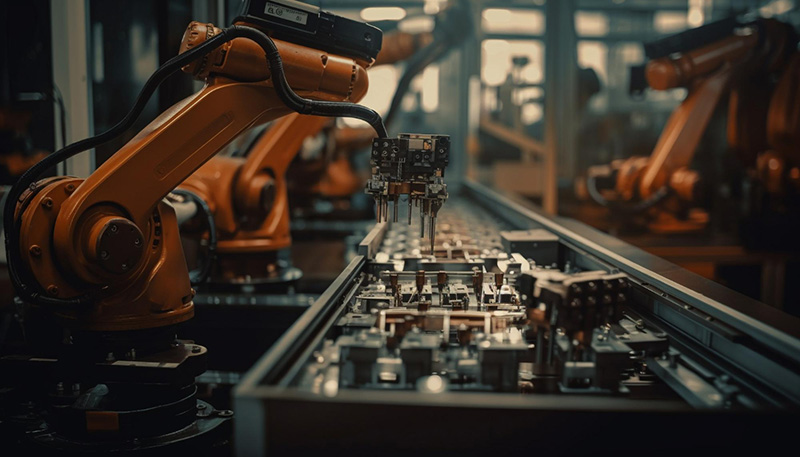
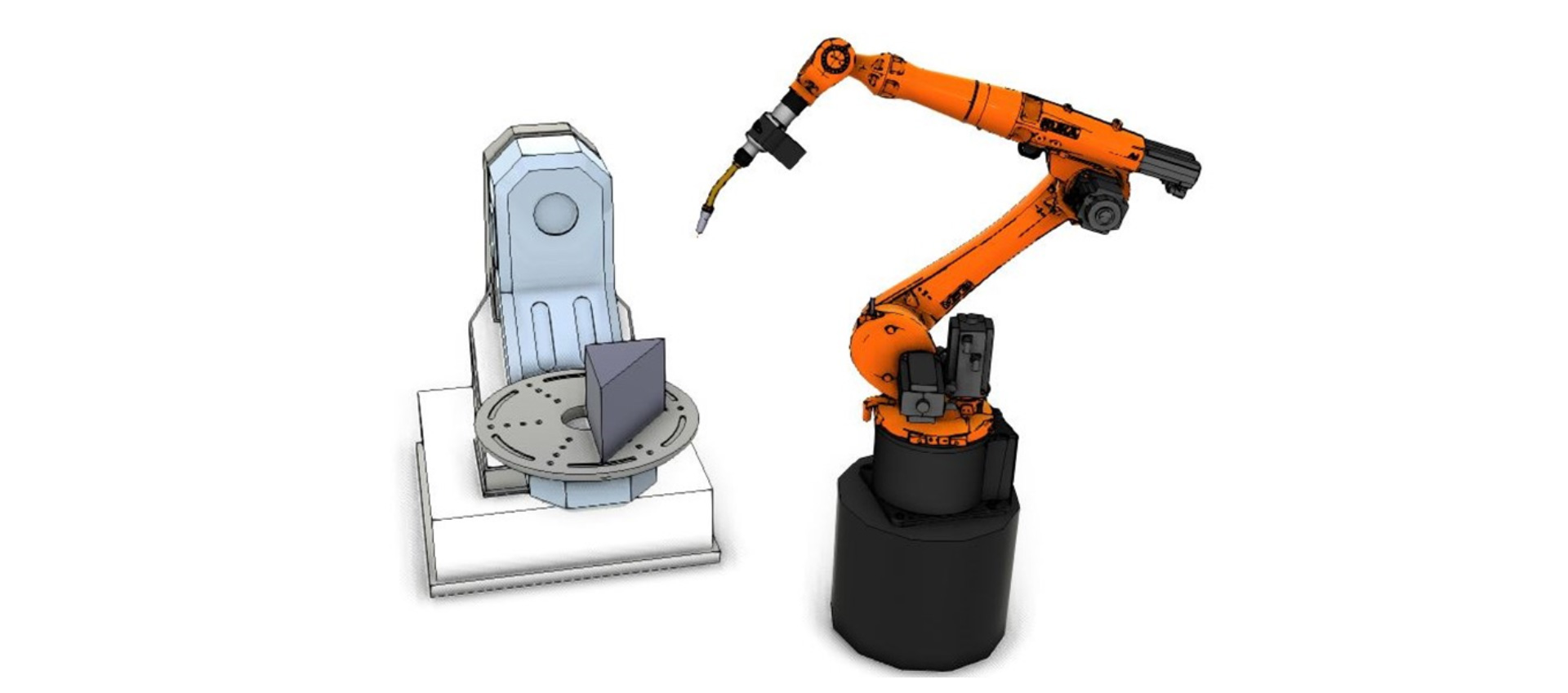
Customized robotic automation solutions using 3-axis and 6-axis robots for tasks such as material handling, assembly, palletizing, welding, and machine tending. Enhances accuracy, consistency, and throughput in manufacturing environments.
• 3-Axis Robots: These robots typically move along three linear axes (X, Y, Z), meaning they can move up/down, left/right, and forward/backward. They are simpler, less expensive, and ideal for tasks that require movement within a confined, rectangular workspace, like pick-and-place operations on a flat surface.
• 6-Axis Robots: These are more sophisticated articulated robots, similar to a human arm, with six degrees of freedom (three translational and three rotational). This allows them to reach complex geometries, work at various angles, and perform intricate movements. They are highly flexible and versatile.
Key Components of a Robotic Automation Cell
The core of the cell, chosen based on the task's complexity, reach, and payload requirements.
The gripper, vacuum cup, welding torch, dispensing nozzle, or other tool attached to the robot's "hand" to perform the specific task.
Devices to hold the parts securely and accurately in place for the robot to work on.
Enclosures, light curtains, safety mats, and interlocks to ensure operator safety around the robot.
The "brain" that stores and executes the robot's program.
A touchscreen panel or teach pendant for operators to interact with the system, monitor progress, and make adjustments.
Cameras, proximity sensors, force sensors, etc., to provide feedback to the robot for precision, quality control, or adaptive movements.
Conveyors, feeders, part dispensers to bring parts to and take them from the robot.
Benefits in Manufacturing Environments
Robots perform repetitive tasks with very high precision, eliminating human error.
Every operation is performed exactly the same way, leading to uniform product quality.
Robots can work continuously and often much faster than humans, significantly increasing production rates.
Removes human workers from dangerous or ergonomically challenging tasks.
Automates repetitive tasks, allowing human workers to focus on higher-value activities.
Programmable robots can be reprogrammed for different tasks or products, offering adaptability.
Consistent processes lead to fewer defects and better product quality.